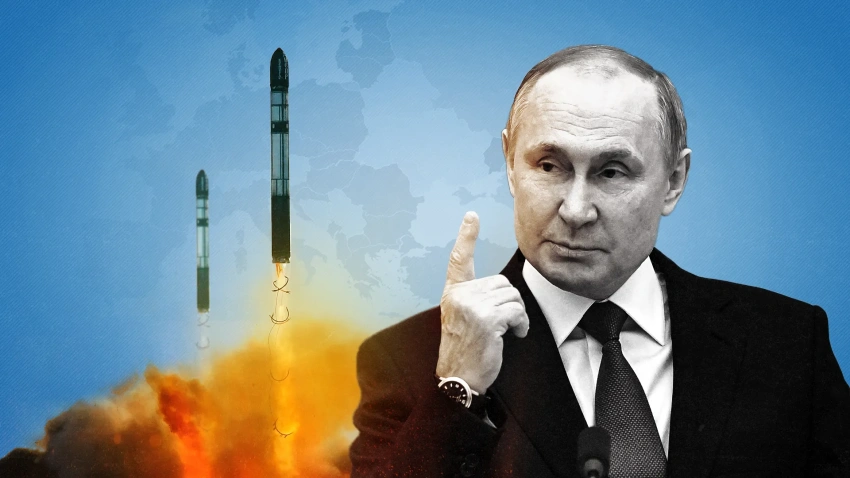
The Russian Ministry of Defense announced the transfer of nuclear munitions to field storage facilities in Belarus as part of joint nuclear exercises conducted by both countries' forces on NATO's eastern flank. The ministry detailed that missile formations in Belarus
received the munitions, loaded them onto launchers, and moved to designated areas in preparation for launch operations.
This move follows drills that commenced in Belarus, focusing on the combat use of nuclear weapons and nuclear support for military units. These extensive three-day exercises involve the Strategic Missile Forces, the Northern and Pacific Fleets, the Long-Range Aviation Command,
and units from the Leningrad and Central Military Districts. Over 64,000 personnel and 7,800 pieces of military hardware are participating, including more than 200 launchers, 140 aircraft, 73 surface ships, and 13 submarines (eight of which are strategic).
This move follows drills that commenced in Belarus, focusing on the combat use of nuclear weapons and nuclear support for military units. These extensive three-day exercises involve the Strategic Missile Forces, the Northern and Pacific Fleets, the Long-Range Aviation Command, and units from the Leningrad and Central Military Districts. Over 64,000 personnel and 7,800 pieces of military hardware are participating, including more than 200 launchers, 140 aircraft, 73 surface ships, and 13 submarines (eight of which are strategic).
The military maneuvers coincided with Russian President Vladimir Putin's official visit to China. Russian military experts argue this timing is intentional, sending a clear message to Western nations that the Supreme Commander-in-Chief's absence from the country does not impede full
control over the nuclear arsenal. They emphasize that modern technical means allow launch orders to be issued from anywhere in the world.
The military maneuvers coincided with Russian President Vladimir Putin's official visit to China. Russian military experts argue this timing is intentional, sending a clear message to Western nations that the Supreme Commander-in-Chief's absence from the country does not impede full control over the nuclear arsenal. They emphasize that modern technical means allow launch orders to be issued from anywhere in the world.
Despite the suspension of the New START treaty, experts note that mutual notification protocols between Russia and the United States regarding planned launches are still observed. They consider these joint exercises a natural and justified response to NATO's activities, reinforcing strategic stability.