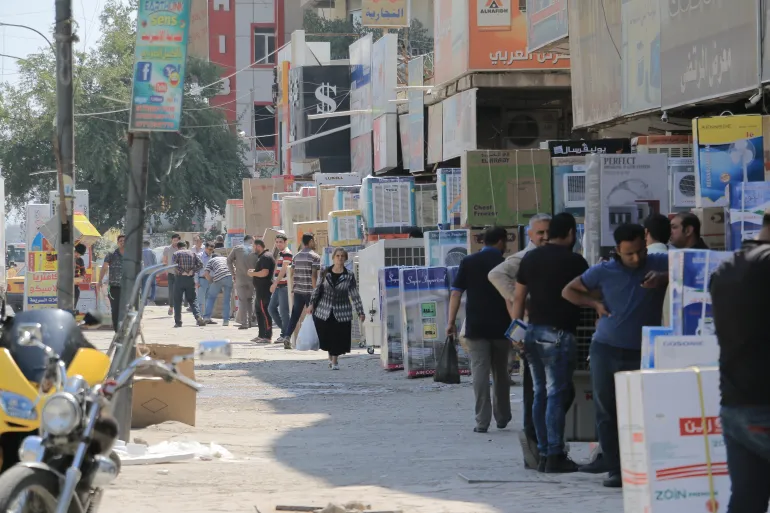
The Iraqi government is facing a severe financial bottleneck that has forced it to prioritize securing employee salaries amid a sharp decline in oil revenues. The government requires approximately 10.8 trillion dinars monthly to cover salaries and basic obligations, while
suffering from a significant financial gap between actual revenues and the volume of current expenditure. In an effort to counter this crisis, government entities are considering an extensive expenditure rationalization program that includes reducing the annual allocations for the Ministry
of Trade. This could lead to a reduction in ration card items and the number of beneficiaries, in addition to imposing financial fees on each card and postponing the inclusion of children. Potential austerity plans also involve reducing the number
of diplomatic missions and cutting regional allocations, amid growing public concern over the living conditions impacts of these measures and delayed salary disbursements, which once again highlights the fragility of an economy entirely dependent on oil.