Amid escalating political rhetoric between Washington and Tehran, questions are once again being raised about the nature of recent American moves, particularly those linked to US President Donald Trump's statements regarding ending the war, and whether they represent a serious
path toward a comprehensive settlement or merely a temporary de-escalation managed according to complex internal and regional calculations.
This reading comes at a time when regional files, particularly those related to regional security and the Iranian nuclear program, are still moving within a sensitive space of escalation and containment, without reaching stable and binding understandings.
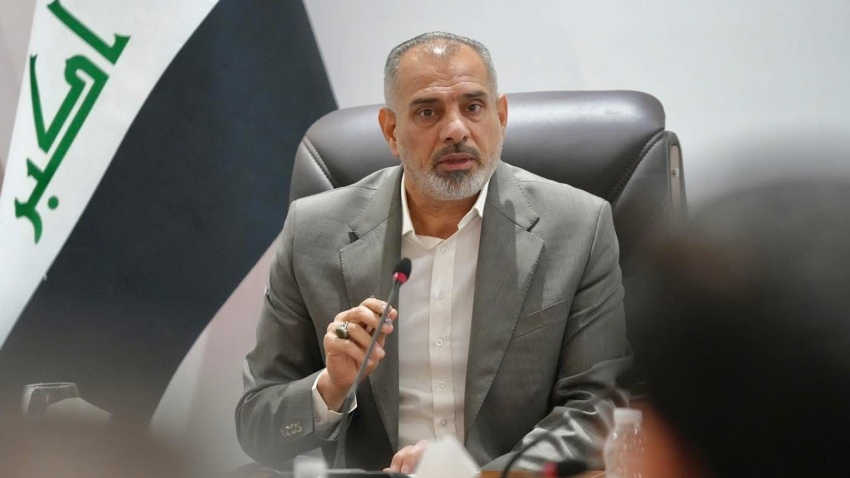
Strategic affairs expert Hussein Al-Asaad affirmed today, Saturday (May 9, 2026), that the promises made by US President Donald Trump regarding ending the war must be treated with political caution, pointing out that "any potential ceasefire may not exceed being
a tactical truce linked to internal and electoral calculations more than a final settlement of the conflict."
Strategic affairs expert Hussein Al-Asaad affirmed today, Saturday (May 9, 2026), that the promises made by US President Donald Trump regarding ending the war must be treated with political caution, pointing out that "any potential ceasefire may not exceed being a tactical truce linked to internal and electoral calculations more than a final settlement of the conflict."
Al-Asaad stated that "declaring an end to the war without entering into official negotiations reflects an American desire to achieve a quick breakthrough and reduce the cost of the complex negotiation path, but the success of any initiative of this
kind remains contingent on the existence of clear understandings and mutual guarantees between the concerned parties."
Al-Asaad stated that "declaring an end to the war without entering into official negotiations reflects an American desire to achieve a quick breakthrough and reduce the cost of the complex negotiation path, but the success of any initiative of this kind remains contingent on the existence of clear understandings and mutual guarantees between the concerned parties."
He explained that "the Iranian leadership deals cautiously with any de-escalation offers put forward by Washington," noting that "Tehran views Trump's initiatives from two angles; the first as an opportunity to improve negotiation conditions and ease pressures, and the second
as a political pressure tool aimed at extracting strategic concessions without offering real commitments."
He explained that "the Iranian leadership deals cautiously with any de-escalation offers put forward by Washington," noting that "Tehran views Trump's initiatives from two angles; the first as an opportunity to improve negotiation conditions and ease pressures, and the second as a political pressure tool aimed at extracting strategic concessions without offering real commitments."
He added that "the margin of concessions between the two sides remains limited due to its connection to the strategic constants of each party, where the United States seeks to protect its regional influence and security interests, while Iran focuses on preserving its deterrence tools and influence in the region."
He continued that "any long-term agreement will not be achieved through political statements alone, but requires a comprehensive negotiation path supported by international and regional guarantees capable of stabilizing the de-escalation and preventing the return of military escalation."
It is worth noting that recent years have witnessed a series of escalating tensions between the United States and Iran, ranging between economic pressures and sanctions and intermittent attempts to reopen negotiation channels.
In this context, the role of American political rhetoric emerges, particularly with Donald Trump's return to the forefront of the scene with statements suggesting the possibility of quickly ending conflicts, compared to warnings that these proposals may be closer to managing an unsolvable crisis.