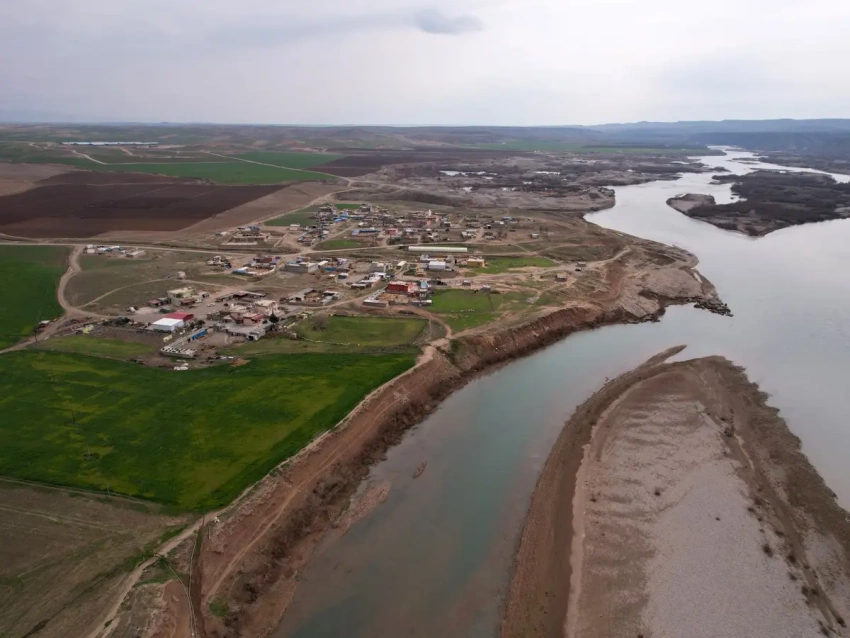
Iraq is facing an escalating water crisis that poses a severe threat to its future, as well as its agricultural and economic stability, driven by climate change and complex regional water policies. Official statistics indicate a sharp decline in the
country's water reserves, dropping from 18 billion cubic meters last year to approximately 10 billion cubic meters currently, directly impacting the livelihoods of thousands of families. In this context, officials and former parliamentarians confirmed that Iraq has effectively entered a
severe drought phase for years. They warned that neighboring countries' continuous construction of dams, without regard for fair water shares, has exacerbated the crisis. Relevant authorities have called for a comprehensive national strategy, including recycling wastewater for agriculture, regulating groundwater
usage, and harvesting rainwater. Meanwhile, the Ministry of Water Resources announced that the current year is the driest since 1933, noting that the revenues of the Tigris and Euphrates basins have dropped to 27% compared to last year, with water
reserves falling to just 8% of the dams' total capacity.