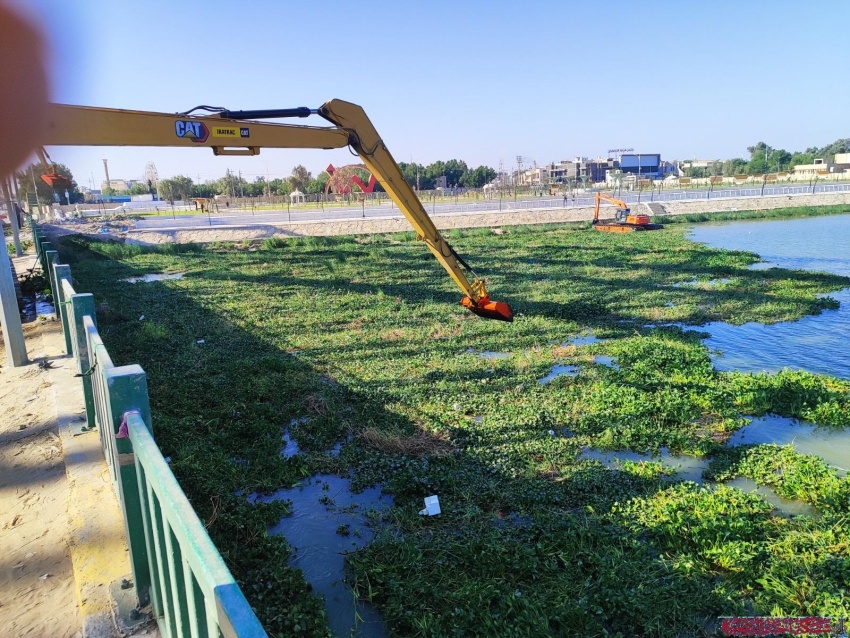
Amid the growing environmental threat posed by the water hyacinth to rivers and streams in southern Iraq, scientific proposals relying on ecological solutions have emerged as alternatives to traditional mechanical methods. Agricultural expert Uday Al-Rubaie introduced a plan based on
biological control using the "water hyacinth weevil," which has proven effective in curbing the plant's spread in specific areas. He explained that this method, successfully implemented in other countries, relies on the insect targeting the plant's leaves and crowns, thereby
weakening its growth and reducing its density. He called on relevant authorities to adopt this biological solution and deploy it in affected water bodies to save water resources and the agricultural sector from the devastating impacts of this invasive pest,
which obstructs water flow and affects biodiversity.