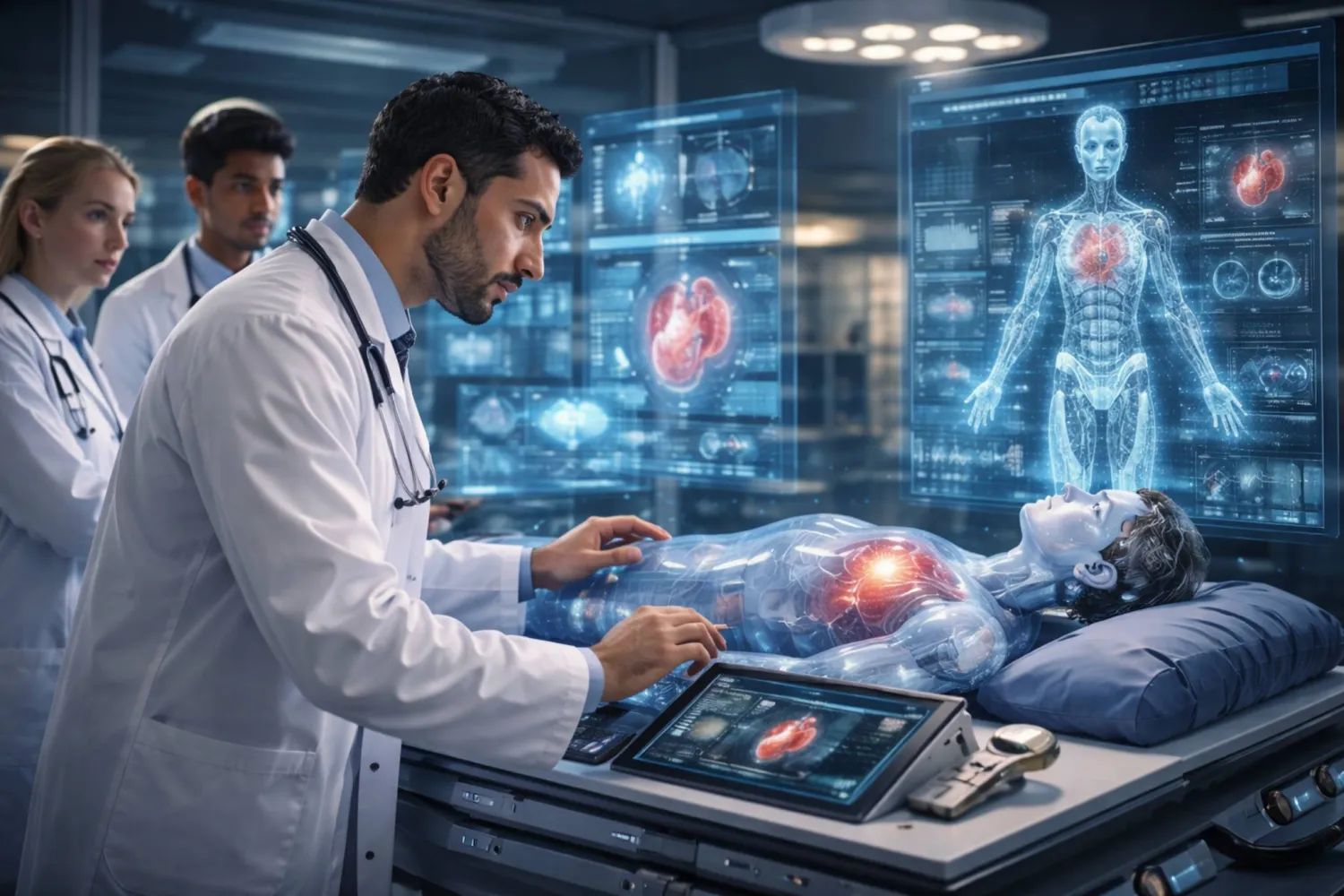
The rapid advancement in artificial intelligence technologies has reignited a fundamental question in the healthcare sector: Can AI surpass doctors in diagnosis and medical decision-making, or will its role remain merely supportive of medical practice? With the expanding use of
algorithms in analyzing medical images such as X-rays and MRIs, and in providing treatment recommendations, AI has become an essential component of modern healthcare systems, demonstrating high capabilities in accelerating diagnosis, early disease detection, and reducing errors caused by human
pressure. Conversely, this development raises growing concerns regarding the limits of reliance on technology, particularly concerning data bias, privacy protection, legal liability for medical decisions, and the gap between digital analysis and comprehensive human understanding of a patient's condition. According
to international reports, major technology companies have begun integrating AI into healthcare directly, including tools that enable linking medical records and providing initial health consultations, while emphasizing that these do not replace human medical diagnosis. Experts believe that AI has
made significant progress in analyzing medical images and detecting complex patterns, yet it remains limited in handling unclear or multidimensional cases, as it lacks human understanding, empathy, and decision-making in emergency situations. In the same context, specialists emphasize that the
future of medicine will not be based on replacing doctors, but on redefining their role to become more reliant on AI tools in diagnosis and decision-making, while preserving the human dimension of the profession. Experts confirm that the future doctor
will be an "AI-assisted physician," combining traditional medical knowledge with the ability to analyze digital data, while the greatest challenge remains achieving a balance between technological advancement and ethical responsibility.