rafidainscope - The General Company for Iraqi Ports announced on Wednesday (September 9, 2026) that it held a meeting to discuss the repercussions of the closure of the Strait of Hormuz and its impact on trade movement, maritime transport, and
supply chains, with the participation of the company's Technical Assistant, Haitham Kazem, and experts from the German Agency for International Cooperation (GIZ).
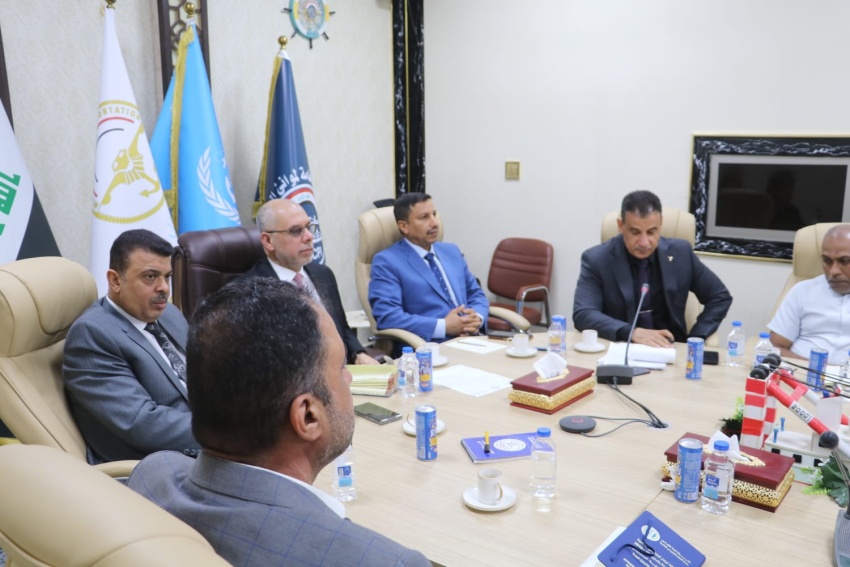
According to an official statement, the meeting, which was held via closed-circuit television and attended by representatives of a number of government institutions and the private sector, discussed the potential challenges facing the economic, commercial, and transport sectors, as well
as the procedures and solutions capable of limiting the effects of the crisis and ensuring the continuity of transport and trade exchange.
According to an official statement, the meeting, which was held via closed-circuit television and attended by representatives of a number of government institutions and the private sector, discussed the potential challenges facing the economic, commercial, and transport sectors, as well as the procedures and solutions capable of limiting the effects of the crisis and ensuring the continuity of transport and trade exchange.
The statement added that the company's Technical Assistant affirmed that the importance of the Strait of Hormuz to trade and maritime transport makes Iraq one of the countries affected by the repercussions of its closure, noting that the company, under
the direction of Transport Minister Waheb Al-Hassani, is working on studying appropriate treatments, dealing with emergency changes, and benefiting from international expertise.
The statement added that the company's Technical Assistant affirmed that the importance of the Strait of Hormuz to trade and maritime transport makes Iraq one of the countries affected by the repercussions of its closure, noting that the company, under the direction of Transport Minister Waheb Al-Hassani, is working on studying appropriate treatments, dealing with emergency changes, and benefiting from international expertise.
The participants discussed ways to enhance the resilience of supply chains and logistics services and raise the level of coordination between government institutions and the private sector, in a way that contributes to the continuation of commercial activity and reducing the potential economic repercussions on Basra and Iraq in general.